Showing posts with label femininity. Show all posts

Thursday, June 3, 2010

John Lennon the Rebel, His Mom and Mimi

The first film that I went to see at SIFF was "Nowhere Boy," which was a narrative about John Lennon's life before "The Beatles." I really enjoyed the film, it was a mixture of good music, insight, drama and humor. I do have to admit though that the entire time I was watching the movie, I was thinking how I could tie it into the course concepts that we learned, and after the movie, I still really did not have a clear concept on what I would write about.

After discussing the film with my boyfriend, who had come with me to see it, we both had come to the same idea that it was weird seeing John Lennon portrayed as this young, buff, trouble-maker/rebel. I had always thought of John Lennon as this "Imagine," counterculture, peace, and make love not war activist. I had made all of these assumptions off of the way I heard people in media or other celebrities talk about him, or the images I saw of him, particularly the famous images of him and Yoko Ono naked. So lesson learned on this one, don't assume things, it just makes an ass out of you. However, it was that assumption that helped me realize what I could write about.

Since I had never really thought of John Lennon as this masculine (i.e., buff, prankster, fighter who loved the school girls) character, it was interesting to watch on film. He was ditching school and riding on the top of buses. He based his physical image off of Elvis and was introduced to rock n' roll by his mom. It was when she told him that rock n' roll music also represented sex, that the film showed him or eluded to him having sex with school girls his age. I guess the macho thing for men to do is sleep around with girls/women.

The film also showed not just physically how strong he looked by casting a buff actor (Aaron Johnson), but how strong he was by fighting. There was one scene right after his mother died, and the family is holding a service at his mother and stepfathers house when one of his friends picks up her banjo and starts to play it. With all of his rage in hearing the music from her banjo, he storms into the room and grabs it from his friends hands. When his friend stands up and says he is sorry but he did nothing wrong, he headbutts the kids face, and I believe he even broke his nose. When Paul brings him outside he grants John permission to hit him if that is what he needed to do, so what did he do? He punched Paul and knocked him to the ground. I felt that they always showed him getting aggressive and physical when he would get upset and cry. To me it was a way of making up for the fact that he was being more effeminate and crying.

Another thing I noticed was the way he would treat his mom and aunt. At times he was very unsympathetic to them. And he felt it was ok to treat them disrespectfully. There was one scene at his birthday party and he is outside with his mom who is smoking, and they begin to talk. Further into their conversation she begins to cry, when he says something along the lines of "here you go turning on the water works again." This leads me into next my next discussion: how the women were portrayed in the film. The two main female characters in this film was his Aunt Mimi (Kristin Scott Thomas), and his mother Julia (Ann Marie Duff).
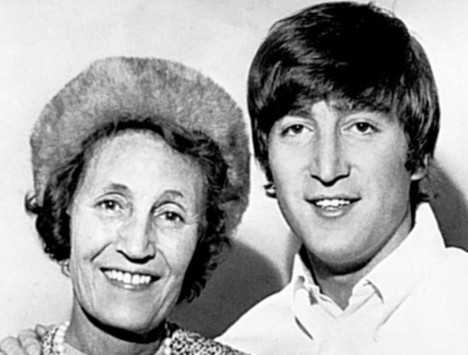


His Aunt was portrayed as this silent, almost mean lady who was out to get him, but when you think about it, she was just trying to protect him and do right by him, since she was the one raising him after his mother gave him up. At first his mom is seen as the outgoing funny one who loves her son, and makes Mimi out to be the horrible Aunt. The film showed this in the style of clothes that they wore. Aunt Mimi was always wearing dark, form-fitting, suit like clothes that covered almost every inch of her. She looked uptight, uncomfortable and too serious. Mimi's house also showed this. It was presented in this very colorless, classic look. Everything was very tidy and clean.


His mother on the other hand was always in bright, colorful clothes that showed skin. She was shown as a free-spirit. Even her house had clutter everywhere in it. The wall paper had a busy print all over it, as well as lots of colors everywhere. So this really helped to show the difference between the two women and their personalities. His mother was shown as the unstable one. They never really said what her problem was, or "illness," but I got the hint that she was bi-polar. There were several scenes where she was super happy, making cupcakes, and dancing and singing to music. In a scene after this, he goes to his mothers house after he is upset with Mimi about something, and she is inside of the house with the blinds shut. She looks like she is crying, and as he is knocking she says silently, "Just go away." So when she is happy she is super happy, when she is sad, she is depressed. In the one scene where she begins to cry, and John makes that statement about her crying, his half-sister comes out and asks if Julia is really sad again. Julia then puts on a fake smile and says she is happy. Once her daughter is inside, she tells John that she is sick, that she has an illness, but the doctors do not know what it is. His step-father was also very controlling of Julia. He made her decisions for her. When John goes to stay with his mom for a while, his step-father soon convinces Julia that it is not a good idea, and in the morning his mom cannot even look at John as he is leaving.

This really shows how independent women who are emotionless are mean, and not fun, compared to women who are colorful and fun tend to be unstable mentally and dependent on a man to tell them what to do.

I have to say that I really loved the movie besides these facts. If you are a "Beatles" fan or love their music, it is a fun movie to watch. It had some serious and unexpected moments, but it had a good amount of humor in it. I also felt it was hard to write about this in terms of the way they portrayed these real-life people, since the film is based off of a book written by John Lennon's half-sister Julia Baird.

All Images courtesy of Google Images

Thursday, April 29, 2010

If Whale Rider Was Made by Hollywood


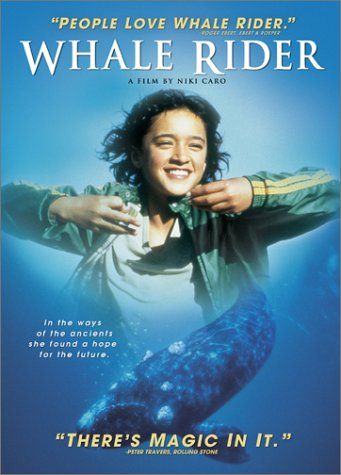
My out of class screening last week was the movie "Whale Rider." I absolutely love this film as well as the positive message it sends to young girls and women. The film takes place in New Zealand and it is a narrative about the Indigenous people in the country, the Maori tribe, and their culture. Paikea, or Pai (Keisha Castle-Hughes) is the main character of the story, and through out the whole movie she fights to show her grandfather Koro (Rawiri Paratene), the Maori Chief, that she can take his place as Chief, even though she is not male. When she was born, she was born with a twin brother, and he was seen to be the future Chief, but he died with their mother during birth. Her grandfather saw her as a curse to their tribe. He wished that she had died instead of her brother, and he lost hope of there being a Chief to take his place in honor of their ancestor Paikea. Her father on the other hand decided to name her after their ancestor, despite her grandfather's wishes.

In the very next scene though, Pai is older, and she is riding a bike with her grandfather, and you can tell that he loves her very much. She in turn loves him just the same, and it is easy to see the admiration she has for him. However, he only changes his mind in loving her as his granddaughter, not as a future Chief. It is from this point on that you really see that he sees her as a girl, who cannot do the things that boys and men can do. In one scene she gets a motor on a boat to work, and she calls to her grandfather to come and see. He walks over very upset, turns off the motor and very aggressively tells her to never do that again, because she could get hurt. It is when her grandfather believes that she is going to live in Germany with her father, that he decides to create a school where he can teach young boys how to be Chief, in hopes of finding a new leader, since Pai is a girl, she could never be their leader.

In the scenes where he is teaching the boys what it takes to be a Chief, you really see the Maori culture, and how they really embrace it. It is never a joke to them, and they do not take it for granted. The movie showcases Maori songs, chants, stick fighting, traditional canoe riding, and war dance. I couldn't help but think how culturally rich this movie was. It felt very authentic and powerful because it was completely made by and starred Maori people. I also loved how strong Pai's female character was. She stood up for herself, and found her own voice, even when her grandfather told her she couldn't be their leader. She is not the typical actress you would find in a movie made in the U.S. by Hollywood. Tracy Rector from Longhouse Media, also came in last week and talked to us about Native Americans in cinema, and how out of the 4,000 movies that had been made, (i.e. written, directed, produced and starring) by Native Americans only 1 has been theatrically released and seen major credit.

This really got me thinking... What if Whale Rider was bought out by a major Hollywood production company, and it was made and released in America? How would it have been different, and how would it have been the same? Well, this is what I came up with...

Hollywood bought the rights to a script and made a movie called "Whale Rider," written by Niki Caro, based off of the book "The Whale Rider," by Witi Ihimaera. The story is about a twelve year old girl named Pai, who tries to gain acceptance from her grandfather, who does not believe she can be their tribal leader. The movie was originally going to be made by all Maori people, but a major production company in Hollywood loved the story so much, they were able to pay a price and buy the rights. They filmed the movie in New Zealand, as well as cast Maori people in minor and major roles, as well as extras. However, the role of Pai has been debated over, and the company decided to cast a young Hollywood starlet. Whom you ask? The oh so talented Vanessa Hudgens. Producers really wanted someone who was sexy, beautiful, not afraid to show some skin, and who looked "ethnic" enough to be Maori. Since Hollywood really had their sights set on this young Disney star to play the role of Pai, they had to change the age from 12 to 17, to make it more believable. They also distanced her more from her father in the film, and his role is to be hardly showcased. The producers also had a problem with the fact that there was not any love interest in the film. To solve that, they got rid of her uncle's character completely, and they created the character of Jude, who will be played by the very sexy Robert Pattinson. He will be a foreign exchange student from England. He is there to be the "White Messiah" for Pai. As much as the producers loved Pai's strong, independent voice, they felt it would be more believable to audiences in America if there was a man to do all of that for her. He is going to be her voice and tell her her worth. He will tell her how important she is and to never give up on her dream as a future Maori leader. He will also be battling it out with her grandfather to win his respect, and to show him that he loves, respects and truly cares for Pai. All of these new changes to the movie will make the movie a huge Hollywood success when it is released next month, and to hopefully make it more "white friendly" for movie-goers. So sit back, relax, grab some popcorn, soda, and I will see you at the movies! Hopefully the movie will sweep the Oscars this year! So to tide all of you who are eager to see the movie, here are some stills the production company released!


Photos were photoshopped by Me; however, I obtained all of the original photos courtesy of Google Images by typing in Whale Rider, Vanessa Hudgens, and Robert Pattinson