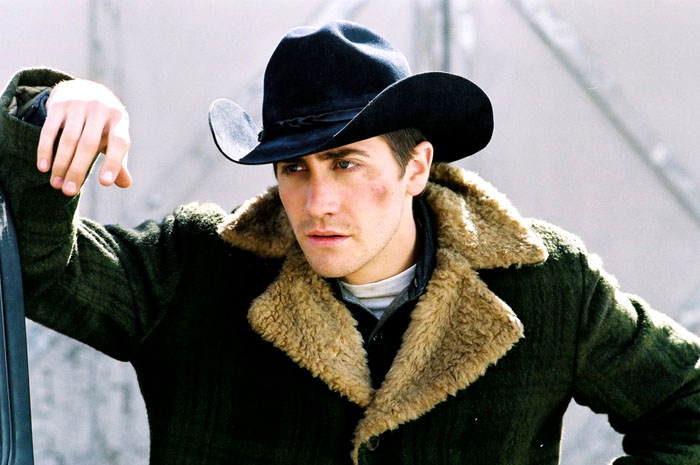
This week in class we began to talk about masculinity in the media, and the rewards and punishments that come with expressing or not expressing it. During the discussion, I could not help but think about the movie “Brokeback Mountain,” and the two main characters in it. In every aspect of masculinity that we talked about, the name and image of Ennis Del Mar (Heath Ledger) kept appearing in my head. Was it because the cover of my text book has a scene from the movie on it, and the book just happened to be sitting right in front of me? Well, maybe; however, it really made me re-think the movie again in terms of masculinity. I set out to watch the film again, not as an endearing love story between two men, and the complexity of their "unsatisfactory situation," as Jack says, but as a movie with a masculine message behind it, and to see what that message could be.
The general plot of “Brokeback Mountain,” is that it's a Western about two gay men, or two gay cowboys to be exact, and the twenty years of their relationship. My textbook “America On Film: Representing Race, Class, Gender and Sexuality At The Movies,” by Harry M. Benshoff and Sean Griffin, defines the Western genre as promoting “a masculine ideal of a strong, unemotional, aggressive hero closely tied to nature and hard manual labor.” (pg. 261). This movie really showcases how these two men accept or don't accept who they are as gay men. It is interesting to me that they picked this type of genre to showcase a movie about two gay men, because they go about breaking typical stereotypes of gay men, and put them in what is typically a more masculine genre. Since Ennis is the hero in this movie, he is more unemotional and strong. He keeps his relationship with Jack private and his status “in the closet.” Jack (Jake Gyllenhaal) on the other hand, is more effeminate. He shows his emotions and he steps outside of the masculine role a little bit, which enables him to be more free and not live in fear. Jack wants to spend the rest of his life with Ennis. He spends pretty much the whole movie waiting for Ennis to step outside of his masculine role of living in fear of being found out, so that they can finally spend their lives together. “Brokeback Mountain,” really broke a lot of the typical stereotypes placed on gay men by the media. If you look at each of the two characters and break down what makes them masculine, or not as masculine, you can see how they present a masculinity message through reward and punishment.

Ennis Del Mar is the main character and or hero in this western. He epitomizes the western hero perfectly. When he is first introduced into the movie, he is leaned up against a wall, hiding his face with his cowboy hat. My first thoughts were, “Oh my gosh he looks like the manly “Marlboro Man.” I want to expand on the masculine image he represents from this point of the movie on. He is a “real man” a “man’s man” by Hollywood standards. He is unemotional, and he hardly talks throughout the movie. Jack as well as Ennis’ “little gal from Riverton,” Cassie, whom he briefly dates later on in the movie, even comment on his lack of words. When he is telling Jack about his parent’s death, he does so in a casual manner, and with very few words. He gets straight to the point, and he never shows that he is deeply saddened by the fact that his parents had died leaving him all alone to be raised by his siblings. “Real Men,” are strong and do not cry. When he and Jack are up on the mountain working they really start to get to know each other, and at the beginning of their bonding, which is initiated by Jack, Ennis can hardly even look at Jack, let alone smile at any of his jokes. You can tell that he wants to laugh or smile, but forces it back. “Real Men,” are unemotional, they can’t smile or show happiness.
Ennis is also a very physical, aggressive character. Every time that he does get upset or emotional he becomes violent. He shows his masculine role with his aggression. Right before he and Jack are about to leave the mountain, he is so upset that they have to leave each other that he and Jack’s playful brawl turns into a fight of masculinity. Ennis gets hurt and ends up punching Jack back when he goes to comfort him. He does this almost in a sense of reminding Jack that he is a “real man,” or that he is “the man” in the situation. He doesn’t need Jack to comfort him. “Real Men” can handle themselves without help. When they actually do part in the road and go on their separate ways, he starts to cry and physically get sick in an alley way. In response to his emotional breakdown, he yells at a passer-by, and punches the wall. In another scene where him and Jack are together for the last time and Jack says that famous romantic line, “I wish I knew how to quit you,” Ennis becomes his most emotional in the whole movie, and he tells Jack to go on and quit him and to leave him be. The entire time, he is crying and wiping away tears. When Jack goes over to comfort him, he starts to fight him off, and push him away. Ennis Del Mar is a “real man,” in this film, and Hollywood cinema does a good job of showing that.

What does Ennis’ masculine role in society cost him in his personal life? He lived his life with the idea of the traditional masculine role men are supposed to play. He lives his life in fear because he doesn't want the secret of his sexuality to be known: he will be punished for it . His need to always be a “real man,” also strained his relationships with Jack, Alma his wife/ex-wife, his daughters, and his brief relationship with Cassie. His relationship with his wife Alma starts out well. I always felt that Ennis really did love Alma in his own way. However, he made sure to assert his masculinity through aggression with her. In one scene he shows up at her work with their two little girls in tote, and he wants to drop them off with her, while she is on the clock, so that he can go to his job. She refuses to take them at first, since she is on the clock, and she does not want to lose her job because of it. She tries to get him to work at another time, but he gives her a threatening, almost violent look of male dominance and she gives in, and she does so in a way that says, “I am sorry to question you, I am in the wrong.” In a later scene, Alma actually takes a blow at his masculinity, instead of backing down to him. They are in the middle of making love, when she suggests that he stops because they don't need anymore kids, and the first words out of his mouth are, “If you don’t want no more o’ my kids, I’ll be happy to just leave you alone” and she responds with, “ I’d have ‘em if you’d support ‘em.” This is a good example of how media has brought men up to believe they need to be the masculine supporters of their family. However, she tested his masculinity here, and made him feel like less of a man because he could not support his kids. The very next scene they are in the divorce court. From that point on you really see how his relationships with everyone become strained. He goes on to be the “lonely cowboy,” who does not need anyone. He has to be a man, and just put up with what life hands him. His “real man” unemotional self, gets in the way and destroys the relationships he has with everyone in the movie. Ennis is not completely devoid of emotion, and towards the end of the film, he shows a little more emotion. However, he still ends up alone, and cut off from everyone in his life because of his masculinity.

Jack, on the other hand shows plenty of emotions. He does not live in fear like Ennis does, and he even has these ideas for them to spend the rest of their lives together. Jack is a manly character, but he is not as much of a “real man” as Ennis is. He has manly jobs, he rides bulls in the rodeo, and he is a cowboy. So Jack is a masculine guy. However, he is a little more free to step outside of the masculine role a little bit, and be himself. Jack allows himself to show his emotions more. Jack has his masculinity tested a lot in the film. When it comes to him stepping up and being more of a man, he tends to back down just like Alma does to Ennis in the grocery store. His masculinity is really tested by his wife Lureen’s father. I figured her father had a problem with Jack for two reasons. One, was that he was threatened by Jack for marrying his only daughter, so he had to stress the fact that he was the more masculine one between the two. In one scene, right after Jack and Lureen have their son, her father walks into the room and tosses his keyes at Jack so he can go get something out of the car for him, instead of doing it himself. He then goes on to gloat to Jack that his grandson “is the spitting image of his grandpa.” I took it that he was jealous of Jack because, he was able to produce a son, which is something that a masculine man does. His father in-law never had a son of his own to talk about like that, or to be able to turn a boy into a man. So he is taking all of the credit away from Jack, who backs down from the situation.

The second reason is that her father could sense that Jack was a more effeminate and he ridiculed Jack because he knew he was not man enough to stand up to him. In a scene, Lureen is with her father and some guy in the office, and the man asks her father if Jack used to ride bulls, and he chirps back with, “ he used to try,” with an emphasis on the “try.” Bull riding is a masculine thing to do in my book. Not every man can ride a real bull and handle being thrown off. He emasculates Jack buy saying that he was not that good at bull riding. He pretty much says with his emphasis on "try" that, “Jack is not masculine enough to ride a bull. Real men can ride bulls, he just tried.”
There is one specific scene though where Jack finally stands up to his father in-law, and it is when the family is getting ready to eat Thanksgiving dinner at Jack and Lureen’s house. Lureen spends “three hours” making a beautiful family dinner, and Jack is about to start carving the turkey for everyone. Because it is the man’s job to carve the turkey, his father in-law grabs the knife from him, and takes over. Again, showing that Jack is not man enough to carve a turkey in his own house and dominates Jack. Jack backs down like he always does, however, it is obvious that he is aggravated that his masculinity is being tested. He get’s up and turns the football game off, after Lureen tells their son that he can watch it after dinner. Well, Grandpa takes over the situation and turns the game back on while saying something along the lines of, “if you want your son to grow up and be a man, he should watch the football game.” Jack reaches a boiling point, because not only is Grandpa disrespecting Jack by asserting his male dominance over him, he is also showing their son that it is okay to disrespect the women in your life, including your mother who spent “three hours” making your dinner, because “real men” watch football at the table, and do what they want. In a struggle of male dominance, Jack finally yells at the man, emasculating him by telling him, "This is my house! This is my child! And you are my guest! Now sit the hell down before I knock your ignorant ass into next week." Jack stands up and takes over the manly duty of carving the turkey. Jack finally stood up to his father in-law and showed his masculinity.
Jack steps outside of the traditional masculine role. He is shown to be more effeminate than Ennis, but this allows him to connect with people more, and have relationships with the people around him. He is more free to be himself, and he does not live in fear like Ennis does. However, (Spoiler, if you have never seen the movie), his stepping outside of the masculine role, ends up costing him his life. Ennis warned Jack that this could happen, but Jack was not as “real” a man as Ennis. He could not hide his desires and live in fear, so he was murdered or punished. He dies a very sad, brutal death by some homophobic men that find out about his sexuality.

Although the story that most people see, which is what I always saw, is a love story between two men, I can clearly see another underlying message that the Hollywood media is getting across to gay men about their masculinity. It delivers the message in a reward and punishment way that says, "it is ok to be gay as long as you are unemotional, aggressive, strong, tough and “keep it in the closet”. You may end up alone, living in fear, and emotionally detaching yourself from every relationship you are in, but that is ok because you will be alive and not punished in some way. Ennis is rewarded for showing his strong "real man" masculinity, and Jack is punished for not being masculine enough or more of a “real man.” This is the masculine message I interpreted or noticed came through by the end of watching this movie over again.
Book Source: America on Film: Representing Race, Class, Gender and Sexuality at the Movies
by Harry M. Benshoff and Sean Griffin
Movie Quotes from "Brokeback Mountain."
Directed by Ang Lee, and based off of the short story by Annie Proulx
 I had made all of these assumptions off of the way I heard people in media or other celebrities talk about him, or the images I saw of him, particularly the famous images of him and Yoko Ono naked. So lesson learned on this one, don't assume things, it just makes an ass out of you. However, it was that assumption that helped me realize what I could write about.

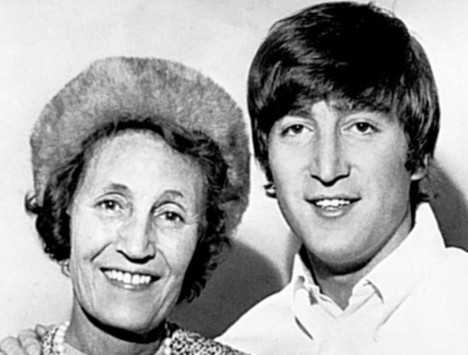


 So this really helped to show the difference between the two women and their personalities. His mother was shown as the unstable one. They never really said what her problem was, or "illness," but I got the hint that she was bi-polar. There were several scenes where she was super happy, making cupcakes, and dancing and singing to music. In a scene after this, he goes to his mothers house after he is upset with Mimi about something, and she is inside of the house with the blinds shut. She looks like she is crying, and as he is knocking she says silently, "Just go away." So when she is happy she is super happy, when she is sad, she is depressed. In the one scene where she begins to cry, and John makes that statement about her crying, his half-sister comes out and asks if Julia is really sad again. Julia then puts on a fake smile and says she is happy. Once her daughter is inside, she tells John that she is sick, that she has an illness, but the doctors do not know what it is. His step-father was also very controlling of Julia. He made her decisions for her. When John goes to stay with his mom for a while, his step-father soon convinces Julia that it is not a good idea, and in the morning his mom cannot even look at John as he is leaving.